









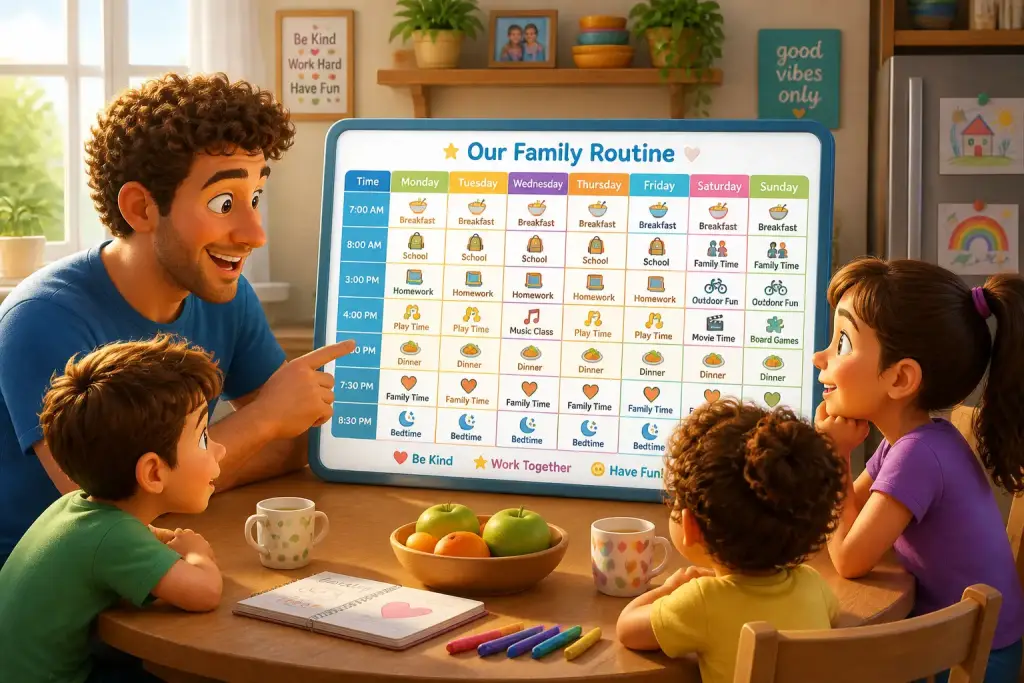
Establishing a family routine is essential for a well-functioning household. Routines help bring order to daily life, making it easier to manage schedules, reduce stress, and create a sense of belonging. With a solid routine, family members know what to expect each day. This predictability can help children feel secure and reduce anxiety. When everyone knows their tasks and responsibilities, it fosters teamwork and cooperation. Here’s how to create a family routine that works effectively for everyone.
- Establish clear roles and responsibilities for each family member.
- Create a visual schedule that everyone can see and follow.
- Regularly review and adjust the routine to meet family needs.
Table of Contents
Identify Your Family’s Unique Needs
Every family is different, and understanding your family’s unique needs is the first step in creating a successful routine. Start by gathering everyone together for an open discussion. Ask each family member about their priorities, preferences, and challenges. This inclusive approach ensures that everyone feels heard and valued. Consider aspects such as work schedules, school hours, extracurricular activities, and family time.
As you discuss, take notes on common themes. For instance, if mornings are hectic, you might need to plan for more time to get ready. If family dinners are important, make sure to set aside time each evening. By identifying these core needs, you can tailor the routine to fit your family’s lifestyle.
Gather Input from Everyone
Engaging each family member in the planning process is vital. Here are some steps to encourage participation:
- Conduct a family meeting. Schedule a time when everyone can participate without distractions.
- Use a whiteboard or large paper to jot down ideas and suggestions. This visual aid helps everyone stay focused.
- Encourage open dialogue. Allow family members to voice their opinions and concerns about the routine.
- Discuss potential challenges. Identifying obstacles early can help in devising solutions together.
Set Clear Goals for the Routine
Once you have gathered input, setting clear and achievable goals is essential. These goals should reflect the needs and desires expressed during your discussions. Consider what you want the routine to accomplish. Do you aim to reduce morning chaos? Or perhaps you want to ensure everyone has time for homework and relaxation?
Start with broad goals, then break them down into specific, actionable steps. For example, if your goal is to have family dinners together, you might decide to set aside a specific day or time each week for this activity. This structured approach helps everyone understand what is expected and how they can contribute.
Examples of Family Routine Goals
Here are some examples of goals you might consider:
- Establish a consistent bedtime for children.
- Designate specific days for family outings or activities.
- Ensure daily check-ins to discuss everyone’s day.
- Create a weekly meal planning session to involve everyone in cooking.
Design Your Family Routine Together
After setting goals, it is time to design the routine itself. This step involves outlining the daily and weekly schedules that will help you achieve your goals. Use a large calendar or planner where family members can see the upcoming events and tasks. This visual representation keeps everyone informed and accountable.
Break the week into blocks of time. For example, you might designate mornings for getting ready, afternoons for school or work, and evenings for family time. Be sure to include time for chores, homework, and relaxation. Flexibility is key, so leave space for unexpected changes or events.
Creating a Visual Schedule
A visual schedule can greatly enhance adherence to the routine. Here’s how to create one:
- Use a large calendar, whiteboard, or digital app that everyone can access.
- Color-code activities based on family members. For instance, use blue for kids’ activities and green for adult responsibilities.
- Include symbols or images for younger children who may not read yet. This helps them understand their tasks.
- Review the schedule daily to reinforce its importance and make necessary adjustments.
Implement the Routine Gradually
Once you have crafted the routine, it’s important to implement it gradually. Starting too quickly can overwhelm family members, leading to resistance or frustration. Instead, introduce one or two elements at a time. For instance, you might start with a new bedtime and a family dinner once a week. This step-by-step approach allows everyone to adjust comfortably.
During the first few weeks, monitor how things are going. Some aspects may work well, while others might need tweaking. Encourage family members to share their thoughts on the new routine. This open communication helps everyone feel valued and involved in the process. You can also celebrate small successes, reinforcing positive behavior.
Adjusting the Routine as Needed
Flexibility is crucial when implementing a new routine. Life is unpredictable, and changes may require adjustments to your plan. Here are some tips for staying adaptable:
- Set regular family check-ins to discuss what is working and what is not.
- Be open to feedback. If a family member struggles with a particular task, find ways to make it easier.
- Revisit goals periodically to ensure they still align with your family’s needs.
- Encourage resilience. Teach family members that it is okay to make mistakes and learn from them.
Involve every family member in creating the routine to ensure buy-in and commitment to the plan.
Encourage Individual Responsibility
As the routine takes shape, it is essential to foster individual responsibility among family members. Each person should have specific tasks or roles that contribute to the overall routine. This sense of ownership helps everyone understand their importance in the family dynamic.
Assign age-appropriate responsibilities to each member. For younger children, simple tasks like setting the table or sorting laundry can instill a sense of accomplishment. Older children can take on more complex chores, such as meal preparation or grocery shopping. Adults should also model responsibility by managing their own tasks effectively.
Examples of Responsibilities by Age
Consider these age-specific responsibilities:
- Preschoolers: Picking up toys, helping with small chores.
- Elementary-aged: Setting the table, packing their own lunches.
- Teenagers: Doing their own laundry, managing homework schedules.
- Adults: Planning family activities, maintaining the overall family schedule.
Celebrate Success and Make Adjustments
Celebrating successes is crucial for maintaining motivation within the family. When everyone adheres to the routine successfully, take time to acknowledge these achievements. This could be as simple as verbal praise or planning a special family outing. Positive reinforcement encourages everyone to stick to the routine and feel good about their contributions.
Even with celebrations, remain open to making adjustments. Not every routine will work perfectly from the start. If something isn’t working, don’t hesitate to revisit and modify it. Flexibility will keep family members engaged and willing to adapt.
Ways to Celebrate Success
Consider these ideas for celebrating achievements:
- Organize a family movie night or game night.
- Plan a special meal or treat together.
- Take a day trip or plan an outdoor adventure.
- Share individual accomplishments during family discussions.
Continuously Evaluate and Improve
Creating a family routine is an ongoing process. Regular evaluations help ensure the routine meets your family’s needs. Schedule monthly or quarterly family meetings to discuss how the routine is working. Use these meetings as a platform for sharing thoughts and making necessary changes.
Encourage everyone to reflect on what they enjoy about the routine and what feels burdensome. This feedback is invaluable for creating a positive environment where everyone feels involved. Make it a point to celebrate changes and improvements, reinforcing the idea that the routine is a living document that can grow with your family.
Steps for Evaluating the Routine
Follow these steps to evaluate your family routine effectively:
- Schedule regular family check-ins to assess the routine.
- Encourage honesty and openness during discussions.
- Take notes on feedback and suggestions for improvement.
- Make adjustments based on collective input.
In summary, creating a family routine that works takes time, effort, and collaboration. By involving everyone in the process, setting clear goals, and remaining flexible, you can establish a routine that enhances daily life. Celebrate your successes together, and continuously evaluate the routine to ensure it meets your family’s evolving needs. With commitment and teamwork, you can build a family routine that fosters harmony and joy.