




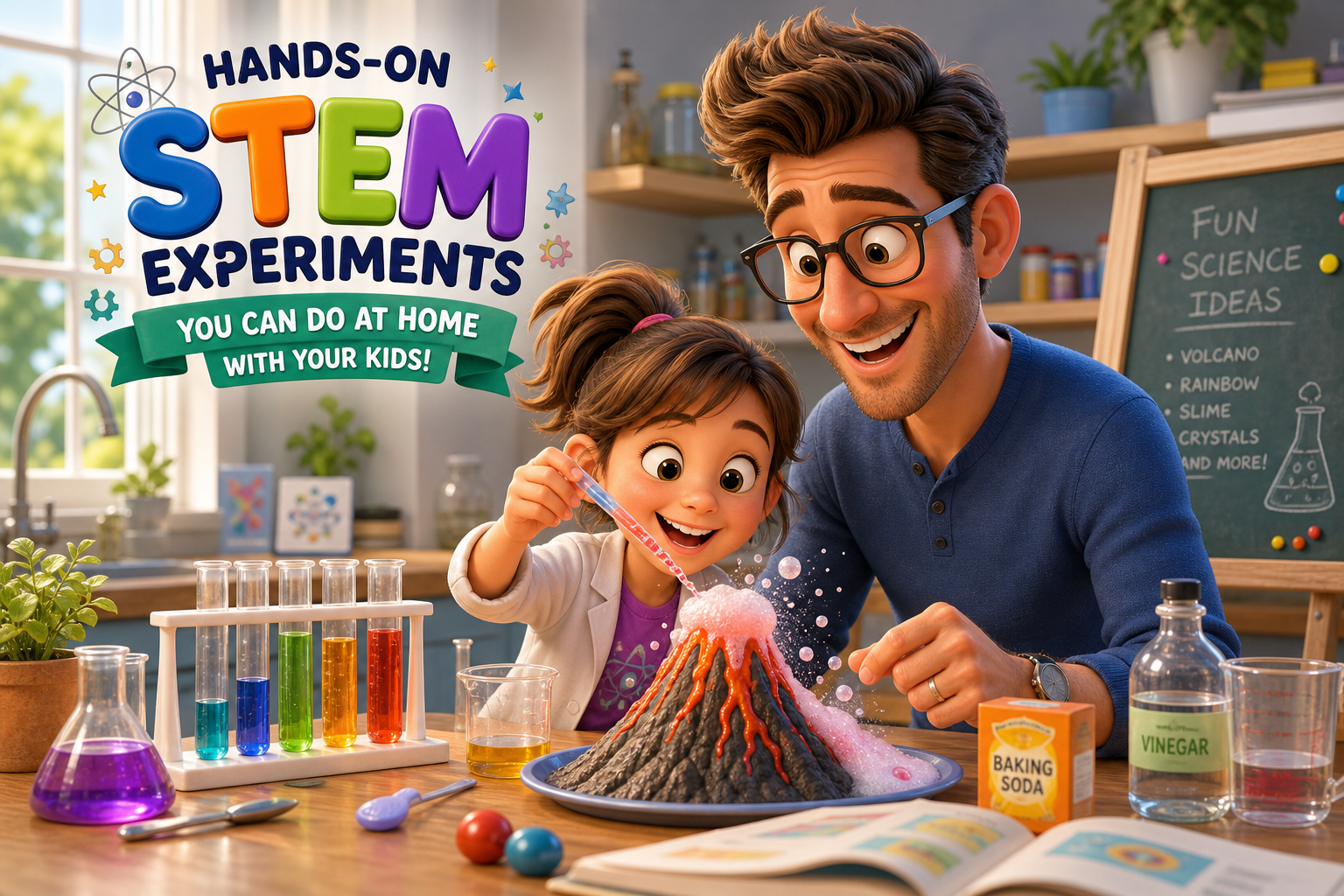
Introduction to STEM Experiments
STEM experiments are a fantastic way to engage children in science, technology, engineering, and mathematics from a young age. These hands-on activities spark curiosity and encourage critical thinking. In 2026, parents are looking for fun and educational ways to keep their kids entertained, especially at home. By trying out simple experiments, you can help your kids learn important concepts while having a great time together. In this article, we will explore various STEM experiments that you can easily do at home with your children. Get ready for some fun learning!
1. Baking Soda and Vinegar Volcano
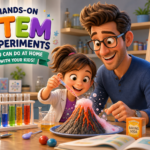
This classic experiment is both exciting and educational. To create your volcano, you will need baking soda, vinegar, and a container. Start by placing the container on a tray to catch any overflow. Add two tablespoons of baking soda to the container. Then, mix in a few drops of food coloring for a lava effect. Slowly pour in the vinegar, and watch as the reaction creates an explosive eruption. This experiment teaches kids about chemical reactions and the release of carbon dioxide gas. Make sure to explain how acids and bases react during the process.
Tips for Success
To make this experiment even more fun, you can build a paper mache volcano around the container. Paint it and let your kids be creative. You can also try different amounts of baking soda and vinegar to see how it affects the eruption size. Measuring the ingredients can introduce math concepts as well.
2. Homemade Slime
Slime is a favorite among kids. Making slime is simple and allows for creativity. You will need white school glue, baking soda, contact lens solution, and food coloring. Start by mixing 1 cup of glue with 1 tablespoon of baking soda in a bowl. Stir well. Next, add a few drops of food coloring to the mixture for some fun color. Finally, slowly add the contact lens solution until the slime begins to form. Knead it with your hands until it reaches the desired consistency. This project introduces kids to polymer science.
Exploring Different Textures
Once you master the basic slime recipe, encourage your kids to experiment with different textures. They can add glitter, foam beads, or even essential oils for scent. Discuss how these ingredients change the slime’s properties. This can lead to discussions about mixtures and solutions.
3. DIY Water Filter
Building a water filter is an excellent way to teach kids about environmental science and filtration processes. You will need a plastic bottle, sand, gravel, activated charcoal, and coffee filters. Cut the bottom off the plastic bottle and place it upside down in a container. Layer the materials starting with coffee filters, followed by activated charcoal, sand, and gravel. Pour dirty water into the top of the filter and observe how the water becomes cleaner as it passes through. This project teaches kids about water pollution and the importance of clean water.
Real-World Applications
Discuss with your kids how water filters are used in everyday life. You can even take this experiment a step further by testing the filtered water for clarity and taste. This can also tie into lessons on ecosystems and conservation.
4. Balloon Rocket Experiment
Balloon rockets are a fun way to explore physics and motion. You will need a balloon, string, a straw, and tape. Start by threading the string through the straw and then tying the string to two chairs or other stable surfaces. Inflate the balloon but do not tie it. Instead, tape the balloon to the straw, making sure the opening is facing backwards. Let go of the balloon and watch it propel forward. This experiment introduces Newton’s Third Law of Motion: for every action, there is an equal and opposite reaction.
Enhancing the Experiment
Encourage your kids to experiment with different balloon sizes and shapes. You can also measure the distance traveled and discuss the results. This can lead to conversations about forces and motion in everyday life.
5. Egg in a Bottle
This experiment is a great demonstration of air pressure. You will need a hard-boiled egg, a glass bottle with a neck slightly smaller than the egg, and a piece of paper. Start by peeling the hard-boiled egg. Light the piece of paper and drop it into the bottle. Quickly place the egg on the bottle’s mouth. As the flame goes out, it creates a vacuum that pulls the egg into the bottle. This shows how air pressure works. It is a simple yet effective way to demonstrate scientific principles in action.
Understanding Air Pressure
After the experiment, discuss with your kids how air pressure affects everyday objects. You can also expand the lesson by trying different sizes of eggs or bottles to see how it changes the outcome.
6. Crystal Growing Experiment
Growing crystals is a fascinating way to explore chemistry and geology. You will need sugar, water, and a glass jar. Boil 1 cup of water and gradually add sugar until no more dissolves. Pour the solution into the glass jar and place a clean stick or string inside. Over several days, crystals will form on the stick or string. This teaches kids about supersaturation and crystallization.
Discussing Real-Life Applications
Use this opportunity to talk about where we find crystals in nature and how they are used in everyday products. Kids can observe how different conditions affect crystal growth, such as temperature and humidity. This can lead to further exploration of geology and earth science.
7. DIY Compass
Creating a DIY compass is a fun project that teaches kids about magnetism and navigation. You will need a needle, a magnet, a cork, and a bowl of water. First, magnetize the needle by rubbing it with a magnet in one direction. Next, push the needle through the cork. Fill the bowl with water and place the cork with the needle on the surface. The needle will align itself with the Earth’s magnetic field, pointing toward magnetic north. This experiment shows how compasses work and introduces basic navigation skills.
Exploring Magnetism
Encourage your kids to explore how different materials affect the compass. You can also discuss the Earth’s magnetic field and its importance in navigation. This can lead to further discussions about geography and the planet.
8. Simple Circuit Experiment
Building a simple circuit is an excellent way to teach kids about electricity. You will need a battery, a small light bulb, and some wires. Connect one end of a wire to the positive terminal of the battery and the other end to the light bulb. Then connect another wire from the light bulb back to the negative terminal of the battery. This creates a complete circuit, causing the light bulb to light up. It introduces kids to basic electrical concepts.
Discussing Safety and Applications
Talk about the importance of safety when working with electricity. You can also explore different types of circuits, like series and parallel circuits. Experiment with adding more bulbs or using different power sources to see how it affects the circuit.
9. Floating and Sinking Experiment
This straightforward experiment helps kids understand density and buoyancy. You will need a large container of water and various objects such as a rock, a plastic bottle, and a spoon. Have your kids predict whether each object will float or sink. Then place the objects in the water and see what happens. Discuss why some objects float while others sink, introducing concepts of density and buoyancy.
Encouraging Critical Thinking
Encourage your kids to think about why certain materials behave the way they do in water. You can also measure and compare the weight of the objects to their size to deepen their understanding of density. This can lead to discussions about materials and their properties.
10. Shadow Play Experiment
Shadow play is a fun way to explore light and shadow. You will need a flashlight and various objects to cast shadows. In a dim room, shine the flashlight on the objects and observe how the shadows change. Discuss how light travels and how shadows are formed. This experiment teaches kids about light sources and the behavior of light.
Creative Expansions
Encourage your kids to create shadow puppets and tell stories using shadows. This creative twist adds an artistic element to the experiment. Discuss how shadows can change with different light angles. This can lead to further exploration of optics and the properties of light.
11. Rain Cloud in a Jar
This experiment is a fun way to teach kids about weather. You will need a glass jar, shaving cream, and food coloring. Fill the jar with water and then add a layer of shaving cream on top to represent a cloud. Next, drop food coloring onto the shaving cream. When the cloud gets heavy enough, it will start to rain into the jar. This visually demonstrates how rain forms in clouds.
Exploring Weather Concepts
Discuss the water cycle and how precipitation occurs. You can also talk about different types of clouds and weather patterns. This experiment can lead to further exploration of meteorology and environmental science.
12. Conclusion: The Importance of Hands-On Learning
Engaging in STEM experiments at home is a fantastic way to inspire a love for science in your kids. These hands-on activities not only teach valuable skills but also foster creativity and critical thinking. As you explore these experiments, encourage your children to ask questions and seek answers. This curiosity will serve them well throughout their education and beyond. With these simple projects, you can create lasting memories while instilling a passion for learning. So gather your materials and get started with your kids today!