



Introduction to STEM Projects
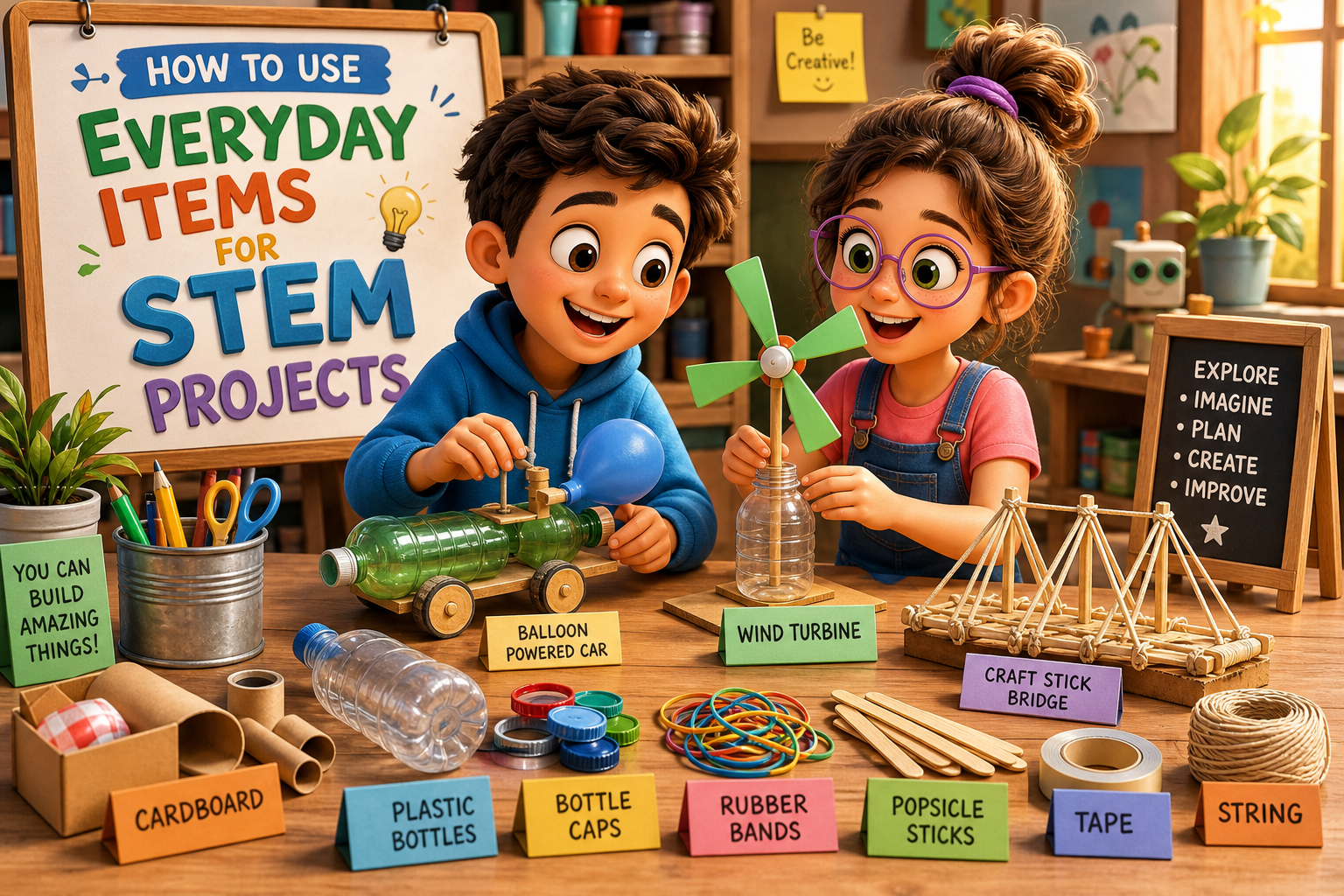
STEM projects combine science, technology, engineering, and mathematics to create engaging learning experiences. These projects encourage creativity, critical thinking, and problem-solving skills in children. The best part is that you can use everyday items to create fascinating experiments and activities. This not only makes the projects more accessible but also teaches kids about resourcefulness. In this article, we will explore various everyday items that can be utilized for exciting STEM projects. You will find detailed explanations, practical tips, and examples to inspire your own creations.
Using Kitchen Supplies for Experiments
Your kitchen is a treasure trove of items that can inspire innovative STEM projects. Common ingredients like vinegar, baking soda, and food coloring can be used to demonstrate chemical reactions. For example, mixing baking soda with vinegar creates a fizzing reaction that mimics volcanic eruptions. To conduct this experiment, place a small amount of baking soda in a container. Slowly add vinegar and watch the bubbles form. You can even add food coloring to make it visually appealing.
Another interesting project involves creating a homemade lava lamp. You will need a clear bottle, water, vegetable oil, and food coloring. Fill the bottle halfway with water, add a few drops of food coloring, and then top it with oil. The oil will float above the water, and if you add an Alka-Seltzer tablet, it will create colorful bubbles that rise and fall. This project teaches about density and chemical reactions in a fun way.
Craft Supplies as Learning Tools
Craft supplies can serve as excellent resources for STEM projects. Items like straws, paper, tape, and scissors can be used to build structures or create simple machines. For instance, you can challenge your child to construct a bridge using only straws and tape. This project encourages them to think about engineering principles such as balance and weight distribution.
Another fun activity is to create a catapult using a plastic spoon and rubber bands. Secure the spoon to a small block of wood or cardboard using rubber bands. Then, place a small object, like a marshmallow, in the spoon and launch it. This project introduces concepts of force and motion while providing hands-on experience. Encourage your child to measure how far different objects travel and discuss which designs work best.
Utilizing Recyclable Materials
Recyclable materials are perfect for sustainable STEM projects. Items such as cardboard boxes, plastic bottles, and egg cartons can be transformed into innovative creations. For example, you can build a simple robot using a cardboard box and some basic electronic components. This project can teach children about circuits and robotics.
Another idea is to create a marble run using cardboard tubes and tape. Cut the tubes into different lengths and attach them to a cardboard base at various angles. Then, drop a marble from the top and watch it race down the track. This project illustrates concepts of gravity, kinetic energy, and engineering design. It also allows children to experiment with different designs to see which works best.
Using Plants for Science Projects
Plants offer a wonderful opportunity to explore biology and environmental science. You can start a small garden using seeds from fruits and vegetables. This hands-on experience teaches about plant growth, photosynthesis, and the life cycle. Encourage your child to observe the changes over time, such as germination and flowering.
Another engaging project is to create a mini aquaponics system using plastic containers. Combine fish and plants to show how they can work together in a sustainable environment. You will need fish, water, and some plants. The fish produce waste that provides nutrients for the plants, while the plants help clean the water. This project teaches children about ecosystems and the importance of sustainability.
Exploring Physics with Everyday Items
Physics can be demonstrated effectively using common household items. For example, you can create a simple pendulum using a string and a small weight. Hang the weight and let it swing back and forth. Discuss the concepts of gravity, elongation, and energy transfer with your child.
Another interesting experiment is to make a homemade hovercraft using a CD and a balloon. Place a balloon on the CD’s hole and inflate it. When you release the air, the CD will hover. This project illustrates the principles of air pressure and friction. Children can test different weights and sizes to see how they affect the hovercraft’s performance.
Incorporating Technology with Everyday Items
Technology can be integrated into STEM projects using simple gadgets and everyday items. For example, you can use a smartphone and some basic sensors to create a weather station. Use your phone to record temperature, humidity, and air pressure. This project helps children learn about meteorology and data analysis.
Another tech-based project is to build a simple circuit using a battery, wires, and a small light bulb. Show your child how to connect the components to make the light bulb glow. This introduces them to basic electronics and circuitry. Encourage them to experiment with different configurations and see how they can modify the circuit to change the outcome.
Creative Ways to Combine Art and STEM
Art and STEM can blend beautifully to create engaging projects. You can use items like paints, markers, and paper to explore concepts in a creative way. For example, you can create a color wheel to teach about color theory. This project can involve mixing primary colors to create secondary colors, which introduces kids to basic chemistry concepts.
Another project is to use watercolors to create a simple science experiment. Place a few drops of watercolors on a piece of paper and use a straw to blow air over it. The colors will mix and spread, illustrating concepts of air pressure and fluid dynamics. This combination of art and science makes learning enjoyable and memorable.
Using everyday items for STEM projects offers endless possibilities for creative and educational activities. By utilizing items found around the house, you can inspire a love for science, technology, engineering, and math in children. Each project not only teaches important concepts but also encourages problem-solving, critical thinking, and creativity. So gather your supplies, unleash your imagination, and start exploring the exciting world of STEM today!