



Introduction to Teaching Science at Home
Teaching science at home can be an exciting journey. With the right approach, you can turn everyday moments into learning opportunities. The goal is to inspire curiosity and a love for science. Parents and guardians can engage children in fun experiments, nature walks, and creative projects. This article explores creative ways to teach science at home, ensuring that learning is both educational and enjoyable.
1. Hands-On Experiments
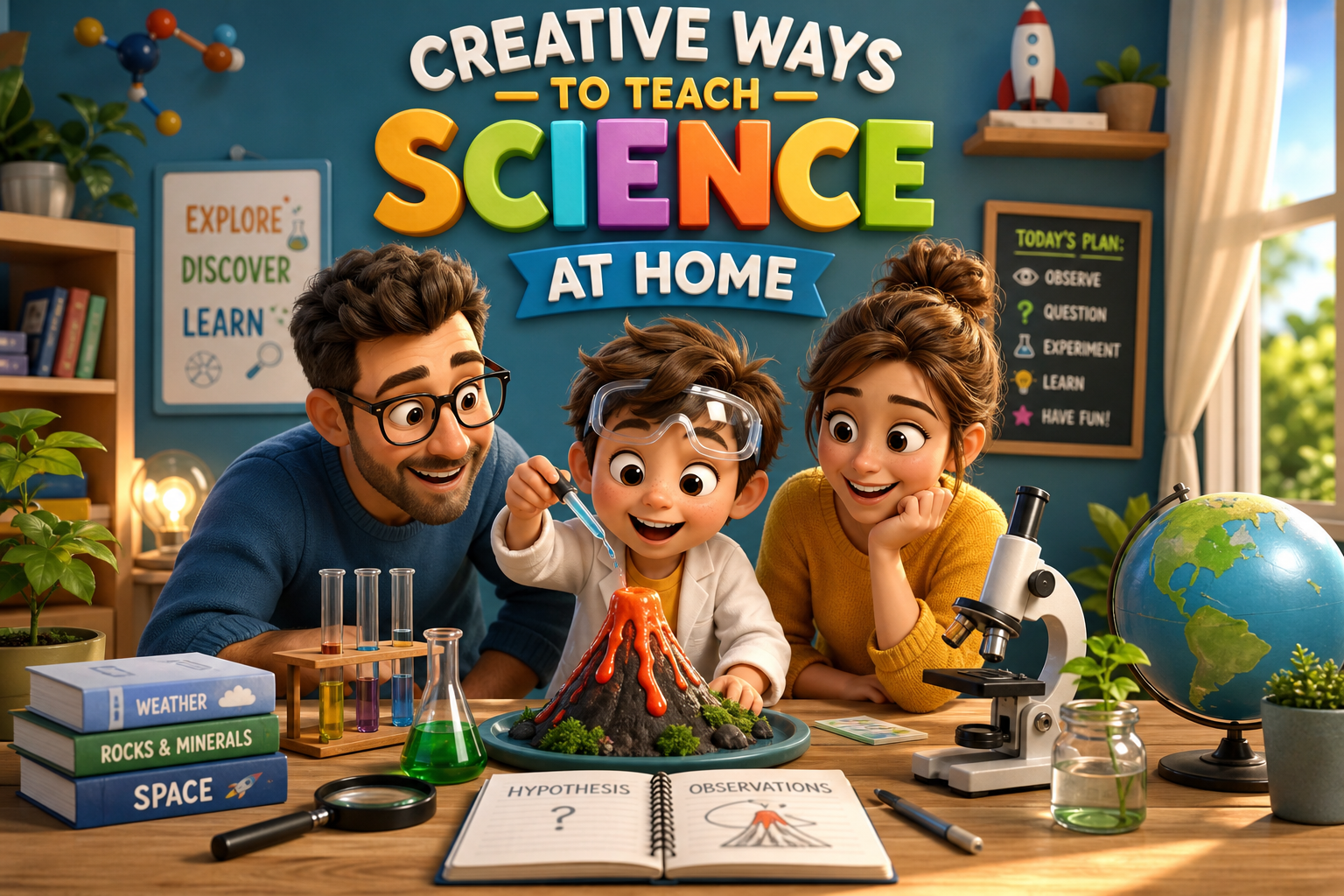
One of the best ways to teach science is through hands-on experiments. These activities allow children to observe results in real time. You can start simple by using items from your kitchen. For instance, mix baking soda and vinegar to create a volcanic eruption. This experiment illustrates chemical reactions. Make sure to explain the science behind it. Discuss why the reaction occurs and what gases are produced.
Another fun experiment is to grow crystals. You can use sugar or salt to form crystals in a jar. Dissolve the material in hot water and let it cool. Over time, children will see crystals forming. This teaches patience and the process of crystallization. Always encourage children to make predictions before starting. Ask them what they think will happen. This sparks critical thinking and curiosity.
2. Nature Walks and Outdoor Exploration
Nature walks provide an excellent opportunity to teach science. Going outside allows children to observe plants, animals, and ecosystems. You can start with a simple activity like identifying different types of leaves. Bring a guidebook or use a smartphone app to help identify plants. As you walk, discuss the importance of each plant in the environment.
Additionally, you can collect leaves, rocks, or insects to study later. At home, create a nature journal. Children can draw or write about their findings. This reinforces observation skills and helps them appreciate nature. Talk about ecosystems, food chains, and biodiversity. By connecting outdoor experiences to scientific concepts, children can learn in a fun and engaging way.
3. Science in the Kitchen
The kitchen is a fantastic classroom. Cooking is a perfect blend of science and art. You can teach measurements, chemical reactions, and changes in states. For example, baking bread is a great way to explain yeast fermentation. Discuss how yeast helps the dough rise and why it is essential in baking.
You can also explore the science of cooking by experimenting with different temperatures. Try boiling, baking, and frying the same ingredient to see how it changes. Discuss why these changes occur and how heat affects food. This method not only teaches science but also creates delicious results. Encourage children to ask questions during cooking. This promotes analytical thinking and a love for exploration.
4. Utilizing Technology and Online Resources
In 2026, technology provides endless resources for teaching science. Many websites offer interactive lessons and videos. Platforms like Khan Academy cover various science topics. Children can watch videos, take quizzes, and track their progress. This interactive format keeps them engaged and motivated. Encourage your child to explore subjects that interest them.
Apps can also make learning fun. For example, apps like Science Journal let children conduct experiments and record results digitally. They can take photos, make notes, and analyze data. This not only teaches science but also helps develop digital skills. Furthermore, online science games can reinforce learning through play. Look for games that match your child’s age and interests.
5. Building and Creating Projects
Creative projects allow children to apply what they have learned. Building models or conducting science fairs can be particularly engaging. For example, constructing a model of the solar system can teach children about planets. Use materials like foam balls, paint, and string to create a visual representation. This hands-on project helps them remember each planet’s characteristics.
Another exciting project is building a simple circuit. You can use batteries, wires, and small bulbs to create a basic electrical circuit. This teaches children about electricity in a practical way. Discuss how electricity flows and why circuits work. Allow children to experiment by adding more bulbs or switches. This encourages creativity and critical thinking.
6. Exploring Scientific Concepts through Art
Art and science can go hand in hand. Use art to help children understand scientific concepts. For example, you can create a color wheel to explain light and color theory. Mix primary colors to see how new colors are created. Discuss why certain colors mix while others do not. This illustrates the science behind colors in a fun way.
Another idea is to create a poster or collage of the water cycle. Use images, drawings, and labels to explain each stage. This visual representation reinforces learning and makes the concept more memorable. Encourage children to express their understanding through creativity. Art projects can help solidify scientific concepts while allowing for personal expression.
7. Science Books and Literature
Books are a valuable resource for teaching science. In 2026, there are numerous engaging science books for children. Look for books that explain complex topics in simple terms. Read together and discuss the content. Ask questions to promote discussion and critical thinking. This can help children develop a love for reading and learning.
Storytelling can also be a powerful tool. Consider books that incorporate scientific principles within the story. These narratives can make concepts relatable and enjoyable. For example, books about space exploration can inspire interest in astronomy. After reading, encourage children to draw or write about their favorite part. This helps reinforce what they learned and enhances comprehension.
8. Community Resources and Local Science Events
Many communities offer resources for teaching science. Check local libraries, museums, and community centers for programs. Many museums host science days or workshops. These events often include hands-on activities that make learning fun. Participating in these events allows children to engage with experts and other learners.
Additionally, look for local science fairs or competitions. These events encourage children to conduct their own experiments and showcase their work. This not only builds confidence but also fosters a sense of achievement. Encourage your child to participate by choosing a project they are passionate about. This can lead to valuable learning experiences and connections with others.
9. Encouraging Curiosity and Questions
Finally, fostering curiosity is essential in teaching science. Encourage children to ask questions about the world around them. Show excitement when they inquire about how things work. This creates an environment where they feel comfortable exploring and learning. When a child asks a question, take time to discuss it together. Use resources to find answers or conduct experiments to explore their curiosity further.
Promote the idea that it is okay not to know everything. Encourage children to seek answers and explore new concepts. This cultivates a love for learning and discovery. Celebrate their achievements, no matter how small. This positive reinforcement motivates them to continue asking questions and exploring science. By nurturing their curiosity, you help them become lifelong learners.
Teaching science at home can be a rewarding experience. By using hands-on experiments, outdoor exploration, and creative projects, you can inspire a love for science in your children. Utilize technology, books, and community resources to create a well-rounded learning experience. Above all, encourage curiosity and questions. This approach ensures that science is not just a subject but a lifelong passion for your child.